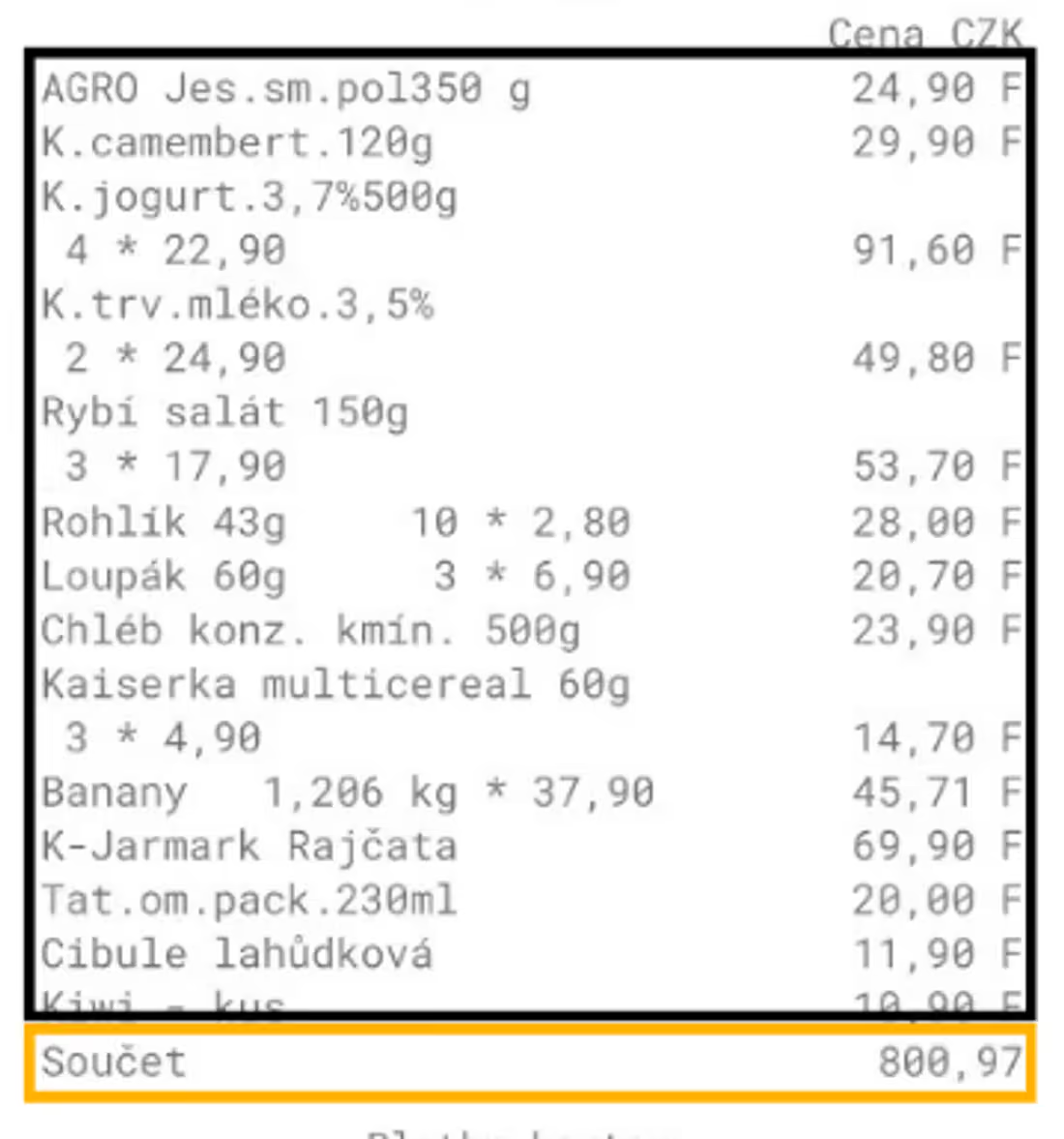
It’s one of the first questions we get when we show someone Účtenkovník: “Why would I photograph receipts? My bank already shows me what I spent.” It’s a fair question, and the answer is simpler than it sounds: your bank knows how much you paid. It doesn’t know what you bought. That difference is the whole point.
The bank shows the amount, the receipt shows the contents
When you spend €40 at the supermarket on Friday, your bank writes a single line into your statement: “SUPERMARKET, €40.00”. Nothing more. You’ll never learn that €14 of it was toiletries, €9 was meat for the weekend, and the rest was everyday groceries. Categories in bank-linked finance apps are built from the merchant, not from what you actually bought — so an entire supermarket run falls into one “groceries” bucket, even though it held laundry detergent, dog food and a gift.
The receipt solves this at the source. You photograph it, Účtenkovník reads the individual line items and files them by product rather than by shop. Only then can you see how much goes to toiletries across every shop each month, how much to meat, or how much you spend on sweets — regardless of which chain you bought them in.
What a bank statement never sees
Bank linking also has blind spots that receipt tracking simply doesn’t:
- Cash. Anything you pay in cash never appears on a statement. The receipt exists either way.
- Split and shared payments. One purchase paid with two cards, or a bill someone else covers half of — your bank only sees its own slice.
- Multiple accounts and cards. A real household pays from several accounts. The receipt is one source of truth, independent of how you happened to pay.
- Returns and warranties. A statement is just a money movement; a receipt gives you the items, the date, and the proof you need for a warranty or a return.
No bank connection — and that’s on purpose
Most personal-finance apps want access to your bank account. We don’t. Účtenkovník needs no such access and never asks for it. We only work with what you hand us yourself — a photographed receipt.
To us this is a fundamental difference. Your banking activity is some of the most sensitive data you own, and a connection means giving a third party standing access to everything that happens on the account. We deliberately don’t go that way. It’s also why our privacy policy is so short — there’s nothing more for us to collect.
When each one makes sense
We’re not claiming the bank view is useless. If you just want a rough idea of how much leaves your account each month and roughly where, your banking overview is enough and takes no effort. Účtenkovník is for people who want to go a step further: to know what the household spends on, to compare the price of specific things over time, and to keep receipts together for warranties — all without letting anyone into their account to do it.
So the next time someone asks us “why receipts, not the bank?”, this is our answer: because household spending isn’t just numbers on a statement. It’s the actual things you bought — and those only show up on the receipt.